Small business owners have been told the same story for years:
“People are job hopping. Loyalty is dead. If you don’t keep up, they’ll leave.”
But in 2026, something surprising is happening.
Employees aren’t leaving as much as you think.
And that should worry you more.
The Shift: From Job-Hopping to “Job Hugging”
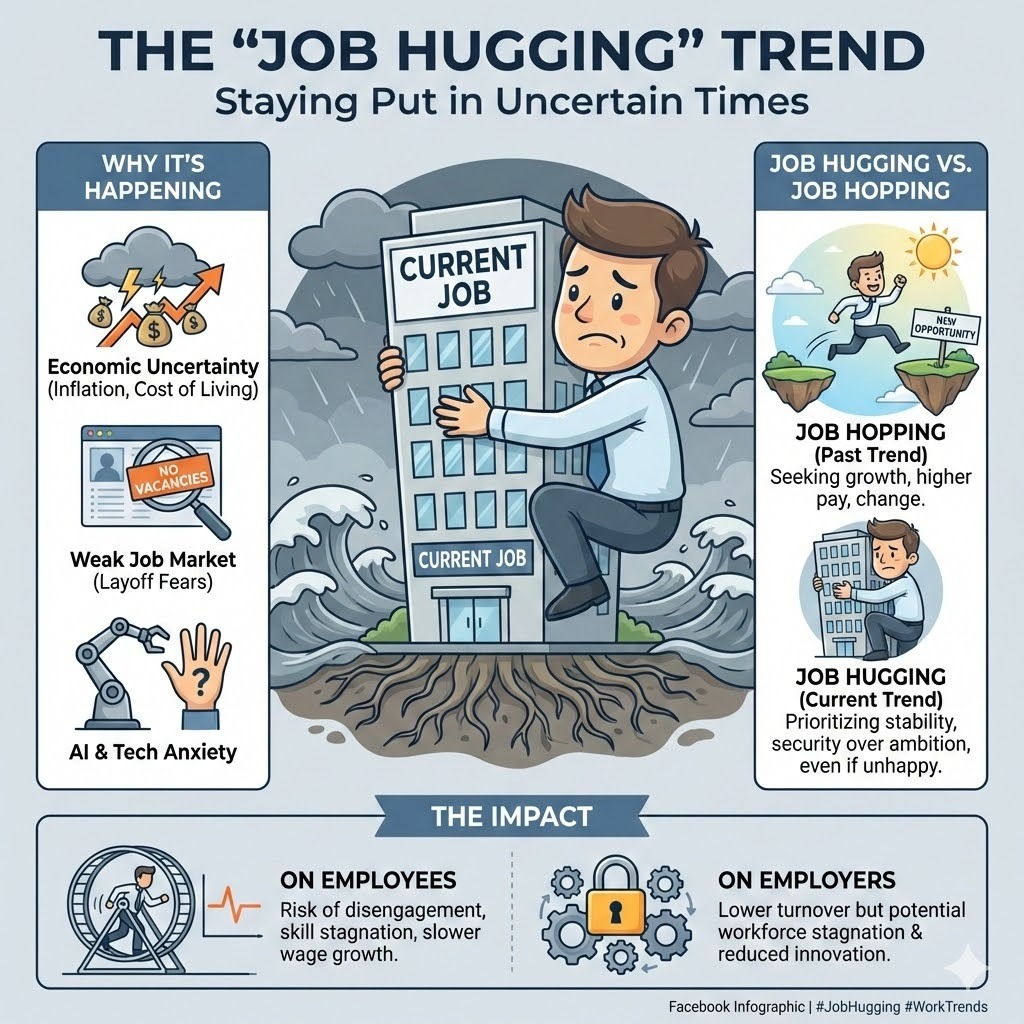
There’s a new workplace trend emerging: job hugging.
Employees are holding onto their current roles, not because they’re fulfilled, but because they feel uncertain about what’s next.
Economic pressure, layoffs in certain sectors, and rising living costs have changed behavior.
People are thinking:
- “Better the job I know than the risk I don’t.”
- “Now’s not the time to gamble.”
But here’s the problem:
Job hugging looks like retention, but it’s not engagement.
According to a 2026 global engagement report:
- Only 26% of employees are engaged
- Just 25% feel genuinely appreciated
- Less than half see a long-term future with their employer
So while employees are staying…
They’re not necessarily invested.
The Hidden Risk for Small Businesses
Job hugging creates a false sense of security.
Your turnover might look healthy.
Your roles might be filled.
Your team might seem stable.
But underneath:
- Motivation is dropping
- Productivity is inconsistent
- Initiative disappears
- Culture quietly weakens
This is retention without commitment.
And it’s fragile.
Because the moment confidence returns to the market (or a better offer appears) those same employees will move quickly.
Why “Job Huggers” Still Leave
Even employees who are playing it safe have a tipping point.
When they do leave, the reasons are predictable:
- Better pay
- Better benefits
- More flexibility
- Clear career growth
The data shows:
- 69% leave for better pay
- 47% for better benefits
But those are just the triggers.
The real issue builds over time:
- Feeling undervalued
- Lack of recognition
- Weak leadership connection
- No clear path forward
Job huggers don’t leave suddenly.
They leave when something finally gives them a reason to.
The Engagement Gap: Where Businesses Are Losing
Here’s the uncomfortable truth:
Most businesses don’t have a retention problem.
They have an appreciation and connection problem.
Employees who feel appreciated are:
- 12x more likely to find work meaningful
- 17x more likely to see a long-term future
And yet only 1 in 4 employees feel that way.
That’s the gap.
Don’t Mistake Stability for Strength
If your team isn’t leaving, that’s not necessarily a sign everything is working.
In 2026, the real question isn’t “Are people staying?”
It’s “Are they engaged, supported, and set up to succeed?”
Because job hugging is temporary.
Engagement is what lasts.
This is where many small businesses get stuck—caught between rising expectations, limited time, and increasing HR complexity.
The businesses that move forward are the ones that step back, reassess, and build a more intentional approach to their people strategy.
If you’re heading into 2026 and unsure whether your HR, leadership, and employee experience are truly aligned (or just “holding together”) it’s worth taking a closer look.
At Focus HR, we help small businesses move beyond reactive HR and build the structure, support, and strategy needed to retain the right people for the right reasons.
If you’re ready to strengthen engagement, reduce risk, and build a team that actually wants to stay, start with a conversation.
Clint Parry, MBA, SHRM-SCP is the Business Development Manager at Focus HR. Based in Arizona, Clint works with growing companies to help them turn HR from an administrative burden into a strategic advantage.